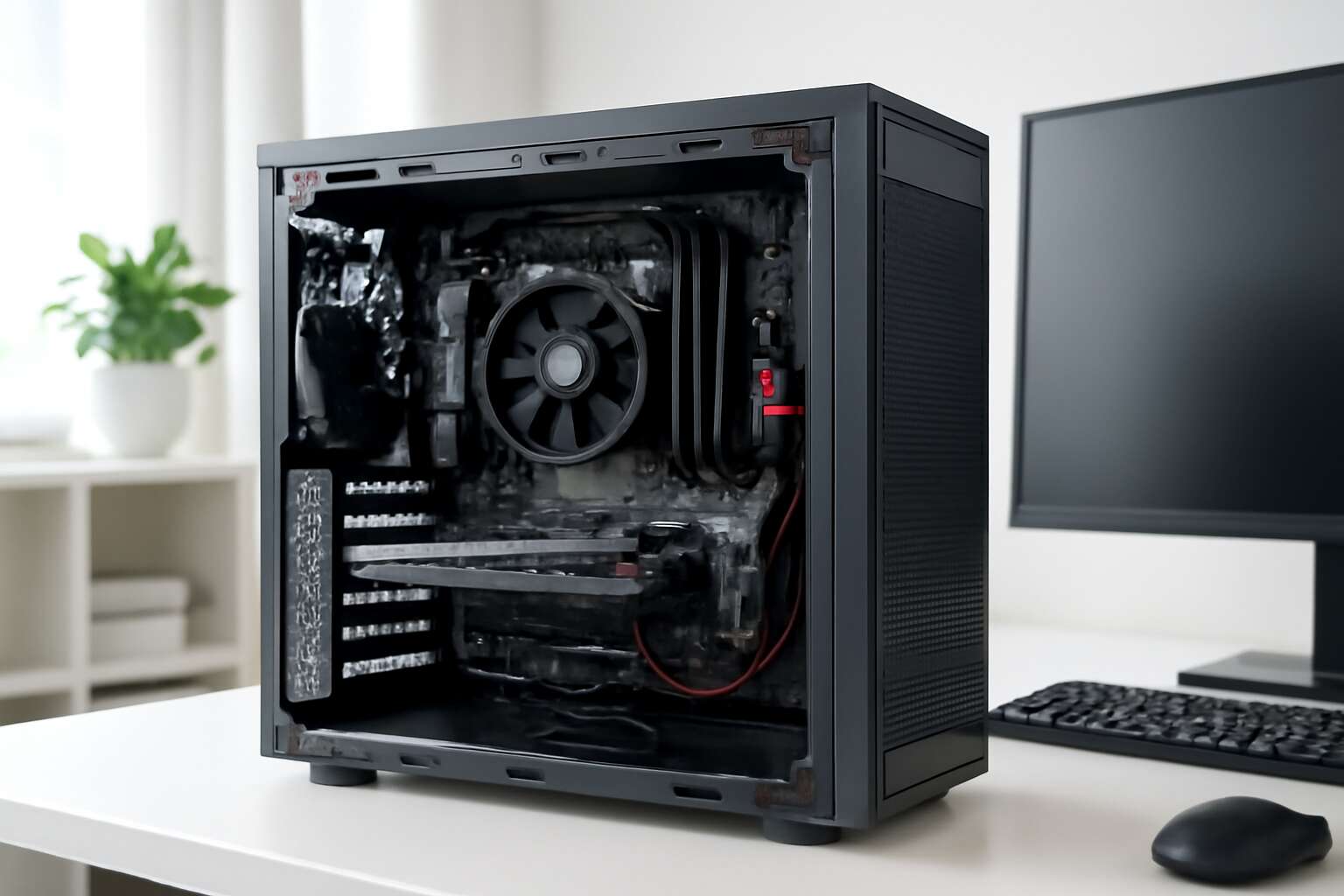
Understanding Desktop Computer Fundamentals
Central Processing Unit and Execution Flow
Billions of operations per second—that’s the tempo behind how desktop computers work. At the heart sits the Central Processing Unit, the brain that guides every click, calculation, and startup sound. In South Africa’s busy offices and cosy home desks, the CPU’s steady cadence turns a simple keystroke into a visible response, weaving task after task into smooth, everyday magic!
Execution follows a swift, repeating routine called the fetch-decode-execute cycle.
- Fetch the next instruction from memory into the CPU.
- Decode what the instruction means and which operations are required.
- Execute the instruction, moving data through registers and caches and then updating the program pointer.
As data travels along the tiny highways inside the computer, memory and the CPU stay in constant conversation. A rapid feedback loop between L1/L2 caches and main memory keeps things responsive, so your screen updates feel instantaneous even as tasks multiply.
Memory: RAM, Cache, and Data Handling
Your desk clock is loud, but memory sets the pace. Understanding how desktop computers work starts with memory—RAM, caches, and the data handling that keeps you scrolling without delay. I’ve felt the shift when bandwidth wins and latency yields. Modern rigs deliver hundreds of gigabytes per second, yet latency still defines response time.
RAM is the working space for active apps—volatile, fast, and spacious enough to hold your current tasks. Cache sits near the CPU, storing frequently used data to dodge longer fetches. Data handling charts the flow from main memory into registers, then back, keeping action smooth.
All this memory choreography powers how desktop computers work in South Africa’s busy offices and homes, quietly shaping every click. I’ve seen it turn a lag into a confident launch, a reminder that small delays can disturb focus as surely as a stray thought!
Storage Technologies: HDDs, SSDs, and NVMe
Storage is behind every click, and in South Africa’s offices, speed translates to momentum. I’ve learned a truth that anchors every build: Understanding how desktop computers work begins with storage and its trio of players—HDDs, SSDs, and the NVMe leap. As one engineer puts it, “speed is storage in motion.”
HDDs offer generous capacity at a friendlier price, yet their spinning disks drag when you summon apps. SSDs skip the platters for instant access, delivering snappy boots and smoother multitasking. NVMe drives ride the PCIe highway, squeezing the most from modern CPUs with parallel channels.
- HDDs: cost-effective capacity
- SSDs: fast access, no moving parts
- NVMe: PCIe-driven throughput
In homes and call-centre suites alike, this trio quietly powers daily tasks—browsing, editing, and collaborating—so you can lose the lag and keep focus in South Africa’s lively digital spaces.
Motherboard and Chipset Roles
Think of the motherboard as the city grid your PC runs on. It hosts sockets, buses, and traces that shuttle data to and from the central brain, all without turning into a tangle of wires. When you ask how desktop computers work, this board is where the magic begins to matter—it’s the platform that lets every component share power, timing, and signals in a predictable chorus.
Chipsets are the traffic controllers. They decide which devices can talk at once and how fast, shaping PCIe lanes, memory compatibility, and I/O options.
- Directs data pathways between processor, memory, and peripherals
- Allocates PCIe lanes to GPUs, NVMe drives, and expansion cards
- Oversees basic power sequencing, clocks, and BIOS/UEFI initialization
Form factors matter. ATX, microATX, and mini-ITX decide size, mounting points, and how many ports fit in your setup. A board’s layout guides case choice, cooling, and future upgrades.
Together, these elements keep the digital gears turning in South Africa’s bustling offices and homes—so you can focus on the task, not the lag.
Core Hardware Components and How They Interact
CPU, RAM, and System Bus Communication
A modern desktop hums with the tempo of a thousand bees, and this is how desktop computers work, a symphony of signal and steel. The CPU, RAM, and the system bus trade whispers in microseconds, choreographing every task from a spreadsheet to streaming video. In this ballet, instructions flow into fast lanes while memory keeps data close at hand, ready for when the clock commands the next step.
Data requests rise like tiny questions. The CPU asks RAM through the system bus; the memory controller schedules the answer and caching keeps future questions close at hand. The whole circuit breathes in harmony, delivering fetch, transfer, and return in a cadence that turns raw silicon into a responsive experience.
- System bus: the highway that carries data and commands between the processor and memory
- Memory controller: the conductor that queues requests and keeps latency in check
- RAM: the fast, writable workspace where data waits just long enough for the next instruction
This choreography underpins the performance felt in every keystroke and cursor blink.
Graphics Processing Unit and Display Output
In the cathedral of silicon, the Graphics Processing Unit stands as a patient conductor, coaxing color, motion, and detail from a tangled stream of data. I watch it translate instructions into light—shaders bending shadows into depth, textures draping surfaces with life—and march the frame toward the display output in a cadence you can almost hear. To understand how desktop computers work, you must follow this glow from chip to screen.
- VRAM stores textures and frame buffers close to the GPU for instant access
- Display pipeline converts frames into pixels and drives HDMI/DisplayPort signals
- PCIe lanes ferry data back and forth, aligning CPU work with the GPU’s rhythm
That partnership with the display is a quiet pact—ripples of light keeping time with a clock. When you scroll, the monitor answers with crisp motion, faithful color, a tangible testament to the unseen choreography inside the box!
Power Supply and Energy Management
Power is the quiet metronome behind every keystroke. If how desktop computers work is a mystery to you, start with the power supply: it converts wall AC into neat DC rails that feed the motherboard, GPU, and a chorus of fans. Energy management turns heat into efficiency and keeps noise in check. In South Africa’s volatile grid, that discipline isn’t optional—it’s reliability and performance.
Inside the box, a few frontline players shape how energy flows:
- Voltage Regulation Modules keep rails steady for stable delivery
- Dynamic power management lets CPU and GPU scale on demand
- Thermal sensors and fan curves balance performance with quiet operation
- Power gating and sleep modes hide in plain sight when idle
Beyond chips, the motherboard’s rails and traces coordinate the power-to-data shuffle. Efficient PSUs and energy budgeting are a quiet promise to durability, especially in a country where load shedding tests every PC’s stamina.
From the power rail to the screen glow, this is how desktop computers work in practice.
Cooling Solutions: Fans, Heatsinks, and Thermal Design
Heat is the quiet rival of speed, especially in South Africa’s sun. Understanding how desktop computers work begins with the cooling handshake between fans and heatsinks—the invisible orchestra behind every chime of the system. “Cooling is performance insurance,” a veteran technician likes to say.
Fans move air to sweep heat away from hot corners, while heatsinks act like radiators, spreading warmth across fins for quicker dissipation. The thermal design then shapes airflow paths, ensuring hot air never stalls near the processor or GPU.
- Fans regulate breeze across components
- Heatsinks maximize surface area with fins
- Thermal design optimizes air routing and compartment layout
With the right balance, noise stays low and efficiency stays high, a quiet backbone of everyday computing in South Africa.
Expansion Options: PCIe and Peripherals
Across South Africa, PC upgrades are driven by one fact: the average business desktop stays in service for about four to five years before performance gaps force a change. Understanding how desktop computers work begins with the handshake between the motherboard, PCIe lanes, and expansion cards. The core idea is modular: the processor and memory supply performance, the slots decide what you can add later. With every upgrade, you’re extending capability, not rewriting the brain.
- Graphics accelerators
- Network adapters
- Storage controllers
- Sound cards
Expansion cards are not just add-ons; they pull data through PCIe lanes, share power budgets, and must fit the motherboard’s layout and case form factor. When you weigh peripherals, you trade space, heat, and bandwidth for capabilities that match South Africa’s diverse workflows and budgets.
Inside the System: Data Paths and Processing
Boot Process: BIOS/UEFI and POST
Inside the system’s humming heart, data surges along glittering paths the moment you power up. A million checks unfurl in a blink, setting the stage for how desktop computers work. I’ve witnessed the LEDs pulse as the chassis stirs, waking from its sleep with quiet purpose.
At the core of that awakening lies the boot process: BIOS or UEFI hands the baton to hardware, then runs POST—Power-On Self-Test—to verify memory, drives, and cards are present and honest. The system then searches for a trusted bootloader, stepping closer to reality in South Africa’s homes and offices.
Here are the essential stages, in order:
- Firmware handshake: BIOS/UEFI initializes peripherals and prepares the battlefield.
- POST run: quick checks confirm components are healthy and in place.
- Bootloader handoff: control passes to the operating system to start your programs.
From that moment, the data paths carry the OS into vivid life, and the screen answers.
Operating System Interface with Hardware
Inside the system, data paths thread the journey from input to output. The operating system sits between software and hardware, turning commands into actions that move across memory, storage, and peripherals. Device drivers, interrupts, and DMA coordinate the flow, so input/output feels instant rather than delayed! Whether in Cape Town offices or homes across South Africa, the flow stays the same.
To picture this rhythm, consider these core moves:
- Device drivers bridge software and hardware
- Interrupts coordinate timely responses
- Direct Memory Access moves data without CPU hands
All of this ties back to how desktop computers work, turning quiet tech into everyday use when you load apps, browse, and create content.
Input/Output Pathways: USB, PCIe, and Network Interfaces
Data moves through a computer like traffic on a city grid. This is how desktop computers work. Inside the system, input and output find clear routes through USB, PCIe, and Network Interfaces, each a dedicated highway for different kinds of data. The pace is set by drivers and controllers that turn digital signals into real actions, and back again.
- USB: peripherals and storage with packetized data and power
- PCIe: high-speed lanes for GPUs, NVMe, and cards
- Network Interfaces: Ethernet and Wi‑Fi for local networks
That trio keeps your screen responsive and your data flowing, whether you’re in a Cape Town office or a home across SA. I see that rhythm in every workstation we assemble—it’s the quiet orchestra behind every click, upload, and restart.
Data Flow: From CPU to RAM to Storage
A modern desktop CPU can execute billions of cycles per second—an engine purring at over 3 gigahertz. This is how desktop computers work: a quiet convoy of signals tracing a path from the CPU’s forge to RAM’s glowing halls and onward to long-term storage.
Inside this sealed theatre, instructions are fetched, data is plucked from memory, and results race toward the display and the storage vault. The choreography happens in microseconds, across copper and silicon, bathed in the soft hum of cooling fans that keep the night from spiraling out of control.
- Signals leap along guarded lanes—fetch, decipher, and move on in a blink
- Memory holds fleeting thoughts, ready for the next act
- Storage preserves the story, patient through the quiet hours
That pulse—the heartbeat of your desktop—travels through South Africa’s offices and homes, a quiet, persistent melody behind every click and screenshot!
Practical Topics for Performance and Maintenance
Upgrading RAM and Storage for Speed
Practical topics for performance and maintenance open doors to smoother systems. ‘Speed is the silent currency of the modern desktop,’ and upgrading RAM and storage for speed isn’t a mystic art; it’s precise tuning that affects how desktop computers work in everyday tasks. When memory is ample and storage responds quickly, multitasking becomes fluid, boot times shrink, and patience returns. For South African workplaces and homes, this means less downtime and more focus during busy days.
- RAM compatibility with motherboard speeds and channels
- Storage choice by OS drive where speed matters most
- Firmware and driver updates to keep data pathways clear
Beyond the hardware, routine habits sustain speed: tidy cables, dust-free cooling, and regular backups. Maintenance becomes a mindful ritual that translates into steady performance when applications demand more memory and swift file access.
Selecting the Right GPU and Display Setup
In the rhythm of a busy South African workspace, the GPU isn’t a mere ornament—it’s the conductor of fluid visuals and snappy renders. The display setup matters as much as the card: higher refresh rates, color accuracy, a panel that breathes with your workflow. Understanding how desktop computers work comes into sharper focus when graphics path balances CPU, memory, and frames meet deadlines rather than queue up.
Practical considerations include power headroom, case clearance, and tidy cabling.
- Power supply capacity and PCIe connectors to handle peak GPU load
- Physical space: card length, slot occupancy, and cooler clearance
- Display connectivity: ensure DisplayPort or HDMI versions align with the monitor
- Calibration and color fidelity: ICC profiles and gamma settings
With mindful cooling and clean organisation, the GPU and display setup become an ally—providing smooth frames, crisp imagery, and a calmer workflow as you work through the day.
Software Optimization vs Hardware Upgrades
‘Speed is the soul of work,’ a veteran technician once whispered. When we consider how desktop computers work, that truth becomes palpable: performance blooms when software and hardware dance in step, not in opposition.
Here are practical topics that bridge daily care with productive power:
- Software optimization vs hardware upgrades: knowing when lean code, streamlined workflows, and smarter startup behavior beat new components to the punch.
- Maintenance hygiene: driver alignment, firmware polish, and stable data paths keep systems reliable without disruption.
- Lifecycle planning: balancing refresh cycles with evolving workloads and total cost of ownership for South African teams.
Ultimately, the choice tilts between conserving energy and inviting horsepower. The path isn’t one size, but a measured balance that respects the rhythm of your day.
Regular Maintenance and Troubleshooting
Across South Africa’s offices, performance woes are more about habits than hardware. A recent snapshot suggests as much as 40% of tickets arise from software bloat, inefficient startups, and misaligned updates. Practical topics for performance and maintenance remind us that elegance, not horsepower, keeps work flowing.
Consider these facets of performance and maintenance:
- Harmonising software cadence with hardware capability to avoid needless upgrades.
- Preserving data path integrity and a stable operational rhythm to prevent surprises.
- Rethinking refresh cycles in tune with changing workloads and total cost of ownership for South African teams.
Understanding how desktop computers work helps South African teams stay agile in a digital era, where wit and wisdom outpace gadgetry.
Real-World Scenarios and Use Cases
Desktop Builds for Gaming
For the gamer in Cape Town or Johannesburg, how desktop computers work isn’t abstract; it’s the heartbeat behind every pixel and frame. I’ve seen real-world rooms—from shared gaming dens to quiet bedrooms—where the right desktop build translates ambition into fluid, whisper-quiet performance.
- Competitive esports at 1080p with smooth 240 Hz panels
- Mid-range builds for 1440p with streaming and chat
- VR-ready rigs powering immersive simulations and titles
These scenarios guide component choices that stay balanced between budget and capability, ensuring upgrades feel natural rather than disruptive, so you enjoy more time gaming and less time wrestling with lag.
Workstations for Creative Apps
Real-world studios across Cape Town and Johannesburg prove that a workstation isn’t a luxury—it’s a creative engine. I’ve seen it in action: when you measure success in frames and color accuracy, how desktop computers work becomes practical, not abstract. The right balance of CPU headroom, GPU snappiness, and steady storage keeps ideas moving.
In practice, these desktops shine in real-world workstations for creatives:
- Photo editing and retouching with color-managed pipelines
- Video editing and motion graphics with smooth timelines
- 3D modelling and rendering with responsive previews
That balance—solid performance without fan noise or unnecessary upgrades—keeps South Africa’s creators in the creative flow, whether in a shared studio or a quiet bedroom office.
Home Office and Everyday Tasks
“The machine should disappear,” a Cape Town editor shared, and that line sticks. Understanding how desktop computers work reveals the engine that keeps ideas moving, not the fan that drowns out thoughts. In a home office or shared studio, these desktops stay calm, powerful, and ready.
From late-night edits to daybreak emails, the home office is a cockpit of small decisions. You’ll rely on steady storage, responsive apps, and a quiet system that never interrupts a thought. In everyday tasks, the right desk companion keeps drafts flowing, calls clear, and work moving.
In practice, a few daily activities anchor the flow:
- Photo culling and retouching
- Video calls and collaboration
- Document editing and light content creation
These everyday uses demonstrate a philosophy: speed without distraction, clarity without glare, and a workspace that respects SA rhythms.
Energy Efficiency and Quiet PC Builds
Real-world scenarios demand a desktop that works as hard as you do. Quiet, energy-smart rigs keep home offices productive without shouting for attention. Understanding how desktop computers work helps explain why fan noise and idle power can derail a focused day in a SA clocking rhythm.
- Low-noise cooling that reduces distraction during late edits
- Efficient power states that idle the machine without waking the neighbors
- Solid-state storage and responsive GPUs for smooth video calls and light content creation
In practice, these choices translate to fewer interruptions, steadier drafts, and a workstation that respects the pace of South African workdays.
Future-Proofing a Desktop System
In South Africa, 57% of remote workers say a quiet, energy-smart desktop keeps them on task longer. Understanding how desktop computers work reveals the quiet heartbeat behind a productive studio or home office. When the room falls silent, ideas flow; when the fan roars, focus dissolves. Real-world scenarios demand systems that balance responsiveness with steady energy use.
- Modular design with simple parts swaps
- Quiet cooling and generous power margin
- Robust, fast storage with flexible I/O
Future-proofing a desktop is a measured craft: room for upgrades, careful cooling, and a dependable power partner. By considering the design behind desktop systems, longevity is mapped to evolving software and workloads, keeping pace without wasted hardware.

0 Comments