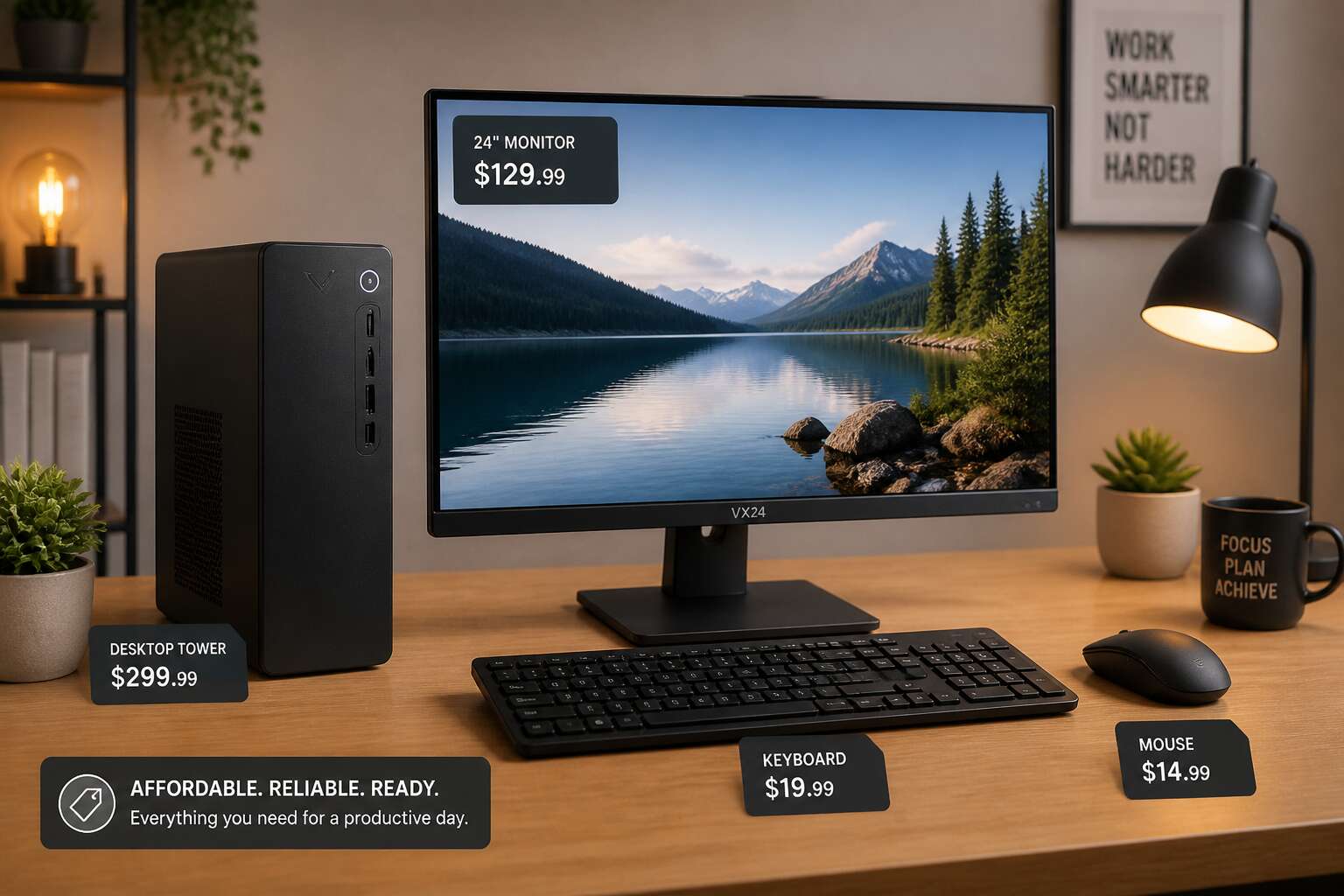
Defining Realistic Expectations for Ultra-Budget Computing
The True Capabilities of a Sub-$250 Machine
In South Africa, the allure of desktop computers under $250 is real, yet their true capabilities remain obscured. These machines do not enable seamless multitasking. They handle basic productivity, browsing, document editing. Demanding software will test their patience. The processor, older, struggles with modern web applications. Memory, 4GB, becomes a bottleneck.
What can you expect from a sub-$250 machine? It handles email, spreadsheets, and streaming video. It will not run video editing or complex 3D rendering. Consider the tasks these machines manage well:
- Office suites and academic work
- Web browsing with a few tabs
- Legacy software and light gaming
Push beyond that, and the system falters. The hard drive, usually mechanical, slows every operation. Upgrading to an SSD helps, but adds cost. Your expectations must align with the hardware’s age. For South African users, desktop computers under $250 serve as an entry point, not a long-term solution.
Identifying Your Primary Use Case to Maximize Value
Purchasing desktop computers under $250 in South Africa demands a frank assessment of your digital habits. The machine will not adapt to you; you must adapt to it. This distinction shapes your entire experience.
Identify your primary use case before spending a single rand. Are you compiling spreadsheets for a small business? Writing reports for a correspondence course? Each scenario changes the value equation. If your daily routine involves one application at a time, desktop computers under $250 serve adequately. The hardware performs best with singular focus.
Consider this hierarchy of needs:
1. Email and text-based communication
2. Document creation and basic accounting
3. Media playback and light research
The moment you move beyond these, you move beyond the machine’s design parameters. Defining your expectations honestly prevents disappointment later.
Understanding the Trade-Offs: New vs. Refurbished Hardware
Here is where the real decision begins. In South Africa, the R4,500 price ceiling for desktop computers under $250 forces a clear choice between new and refurbished hardware. New machines at this price typically ship with 4GB of RAM and a dual-core processor. Refurbished units often carry 8GB and a quad-core chip from three years ago. The specifications favor the refurbished unit; the warranty favors the new one.
- A new machine offers a full warranty and a longer useful life, but the components are entry-level.
- A refurbished machine offers better performance for the same rand, but the history is unknown.
The choice hinges on your tolerance for risk. A refurbished unit from a reputable dealer in Johannesburg or Cape Town can serve you well for years. But you must accept that the previous owner’s usage shaped the machine’s current condition. Ultra-budget computing demands this honest assessment.
Essential Hardware Specifications to Prioritize on a Tight Budget
Processor and Memory Minimums for Everyday Performance
Most budget desktops fail at the processor, not the price tag. A sub-$250 machine with a Celeron or older i3 will handle web browsing, email, and office documents, but only if you pair it with enough RAM. Memory, not the CPU, often becomes the bottleneck for everyday multitasking.
I have seen systems with a decent processor crippled by 4GB of RAM. That is the absolute floor. Look for at least 4GB, and if you can stretch to 8GB, do it! When evaluating desktop computers under $250, prioritize these minimums:
- Processor: Intel Core i3 or AMD Ryzen 3.
- Memory: 4GB RAM, with an upgrade path to 8GB.
- Operating system: 64-bit Windows 10 or 11.
Practically, a dual-core processor is enough for word processing. The real requirement is avoiding memory starvation. So check the memory slots on the motherboard. That detail will save you from a sluggish experience.
Storage Options: SSD Speed vs. HDD Capacity
The storage conundrum often stumps first time buyers. A 128GB SSD feels lightning fast, but it fills up at an alarming rate. A 1TB HDD offers space, but the spinning disk makes boot times feel glacial. The middle ground for desktop computers under $250 usually involves pairing a small SSD for the operating system with a larger HDD for files. This hybrid approach balances the electric responsiveness of flash storage against the cavernous capacity of a mechanical drive.
Here is what the price difference actually buys you:
– SSD: Handles the operating system and critical software, resulting in instant wake times and snappy program loads.
– HDD: Provides the bulk storage for photos, music, and game libraries, where transfer speeds are less critical.
Your choice dictates the entire temperment of the machine. A system that takes forty seconds to boot feels slower than one that takes ten, even if the processor is identical. Prioritize the storage layout that suits your daily ritual. For the price of a small SSD, sacrificing capacity is worth the sanity you gain in responsiveness.
Integrated Graphics: What to Expect for Streaming and Office Work
Integrated graphics on a tight budget is a study in endurance. Streaming a presentation while a spreadsheet recalculates in the background pushes the unit to its limit. On a budget desktop, the video core allocates system memory, so the specifications you choose determine the outcome. Prioritize a processor with a modern integrated unit. Pair it with dual channel memory, because a single stick halves the bandwidth, causing visible stutters. The essential hardware specifications for this strain:
- At least 8GB of RAM, with 2GB reserved for the graphics unit.
- A motherboard with an HDMI port that supports the monitor’s full resolution.
- A CPU with hardware decoding for H.264 and HEVC codecs.
These desktop computers under $250 will not challenge a dedicated graphics card. They will, however, keep a video call steady and a document processor responsive. The integrated graphics unit delivers exactly what is asked, no more, no less.
Connectivity and Port Selection for Peripherals and Displays
Nobody reads the port list until something does not fit. On desktop computers under $250, the arrangement of sockets tells you what the manufacturer expected you to plug in. Four USB ports look generous until you connect a keyboard, mouse, and external drive. Then the count becomes a private joke.
You want USB 3.0 ports, ideally two on the front where fingers actually reach. A VGA port indicates an older model. An HDMI port with support for 1080p at 60Hz is the practical baseline.
- Two USB 3.0 ports on the front panel for daily devices
- An HDMI port with 1080p output
- A gigabit Ethernet port for a stable connection
The audio jack should produce clean sound, because a cheap headset exposes every flaw. For desktop computers under $250, connectivity determines how well the machine pairs with your peripherals.
Strategic Sourcing: Where to Find the Best Bargains Online
Scoring Open-Box Deals on Major E-Commerce Platforms
Strategic sourcing for desktop computers under $250 demands a shift in perspective. Open-box deals on major e-commerce platforms are the core opportunity. Retailers discount returned units by 20% to 40%, and the condition descriptions are honest.
Start by scanning the clearance sections of established online stores. Sort by discount percentage, not just price. Many platforms list open-box items with photos of actual defects. Check the return policy for each unit, as some allow a 14 day window.
Auction sites add another layer:
- Look for corporate lease returns.
- Filter sellers with high feedback scores.
- Bid only when shipping costs are stated.
These sources allow a tight budget to yield a functional machine.
The Untapped Potential of Business Lease-Liquidated Equipment
Business lease-liquidated equipment is a reliable source for desktop computers under $250. Corporations refresh their office fleets every three years. The older units carry business grade processors and memory. I have seen Dell OptiPlex towers sell for less than two thousand rand.
Auction platforms list these machines with terms like ‘lease return’ or ‘corporate asset.’ Sellers provide condition grades and boot up videos. Check that the BIOS password is cleared. Verify the storage drive’s health report. This sourcing method delivers a functional machine without the retail markup.
Navigating Auctions and Flash Sale Sites Safely
Flash sale sites reward the patient and punish the impulsive. A desktop computer under $250 appears on a South African deal aggregator at odd hours, and the savvy shopper must act fast. But speed without scrutiny leads to regret.
Auctions present their own circus. Some listings show blurry photos and vague descriptions. Others offer detailed condition reports and boot-up footage. The difference matters.
- Check seller feedback history
- Confirm the auction’s return policy
- Factor in shipping costs before bidding
Stick to platforms with buyer protection. The best desktop computers under $250 come from sellers who answer questions within minutes and provide real serial numbers. Ignore the listings with stock photos and zero communication. A little suspicion goes a long way.
Refurbishment Programs from Major Manufacturers
Most major manufacturers process millions of returned units annually, and their certified refurbishment programs offer a systematic alternative to scavenging. These programs test every component, replace failing parts, and install fresh operating systems. The result is a desktop computer under $250 that carries the maker’s own warranty, a rare commodity in the secondhand market.
For South African buyers, this route provides particular advantages. Local warranty claims require no international shipping, and VAT is handled transparently at purchase.
– Inspect the refurbishment grade carefully, as “grade A” typically means minimal cosmetic wear
– Verify that the warranty covers labour and parts, not just the latter
– Check whether the operating system licence is included in the quoted price
The process lacks the thrill of a bidding war, but it delivers certainty. You sacrifice the rock-bottom prices of private sales, yet you gain a machine that functions predictably from day one. For those who prefer their bargains without the gamble, manufacturer programs remain the most dependable path to finding affordable desktop computers under $250 that actually work.
Local Marketplaces and the Art of Negotiation
Strategic sourcing on local marketplaces requires attention and timing. In South Africa, private sellers list desktop computers under $250 daily, but the best units disappear within hours. I set alerts for new postings and respond promptly. The negotiation starts with a fair counteroffer, one that respects the asking price while leaving room for compromise!
- Review the seller’s profile and posting history
- Ask for the original invoice if available
- Propose a meeting at a nearby shopping centre
A polite message that acknowledges the machine’s condition often yields a discount. Sellers appreciate buyers who do not waste time. With patience and a firm budget, you can lower the price without losing the deal.
Evaluating the Small Form Factor, Mini PC, and Tower Debate
Tiny Titans: The Advantages of Mini PCs for Home and Office
Space in a South African home or office is a premium commodity. I am always struck by how many people choose a hulking tower when a modest shoebox-sized unit would suffice. For those hunting for desktop computers under $250, the physical footprint of the machine often matters as much as the technical specifications.
The traditional tower case dominates the market, but it is not always the rational choice. A mini PC offers a compelling alternative for those who value a clean aesthetic. The average sub-$250 mini PC will often house an efficient dual-core processor and 8GB of RAM, which is more than enough for web browsing and document creation. You can mount these units directly behind a monitor with a VESA bracket, effectively turning any display into an all-in-one workstation.
When you compare the internals, the difference between a mini PC and a tower is often negligible at this price point. The primary advantages come down to placement and peripheral management.
- Tower cases require dedicated floor or desk space and restrict airflow if tucked into a corner.
- Mini PCs eliminate cable clutter by hiding behind the screen.
- A compact chassis consumes less electricity, which lowers the monthly bill.
- Local courier costs for a mini PC are often lower due to reduced package volume.
The desktop computers under $250 that fit this form factor are typically repurposed enterprise machines from Dell or Lenovo. Their small size does not limit their utility for processing payroll or managing inventory. The only real sacrifice is internal expansion, as you cannot install a full-sized graphics card or an extra 3.5-inch hard drive. For the price, the compact design offers a tidy solution to the chaotic environment of a shared workspace. The quiet operation of these smaller units also makes them far less intrusive in a busy office setting than a high-speed fan from a standard tower.
Traditional Towers: Upgradability and Internal Space
Open a traditional tower and you see what a mini PC hides. The empty drive bays, spare RAM slots, and accessible motherboard headers offer options that a sealed chassis cannot. For desktop computers under $250, that internal space means you can extend the machine’s life instead of replacing it.
Most refurbished business towers from Dell, HP, or Lenovo accept standard components. A second hard drive for backups, a stronger power supply, or a low-profile graphics card will fit without proprietary adapters.
- Tool-less entry panels allow component swaps in minutes.
- Full-height expansion slots support dedicated GPUs.
- Larger fans and heat sinks keep temperatures lower than compact cases.
The tower’s weakness is its footprint. It demands floor or desk space and needs clear airflow. But for a buyer who prioritises longevity, the traditional case remains the rational choice among desktop computers under $250.
Slim Desktops: Clearing Up Their Role in the Budget Segment
Most buyers ignore slim desktops. That is a mistake! When shopping for desktop computers under $250, these units lack the tiny footprint of a mini PC and the expansion room of a tower, yet they deliver a useful balance. They mount behind a monitor or sit in a shallow desk niche.
- Low-profile cards fit, but full-height GPUs do not.
- Proprietary power supplies are common, so check wattage.
- One or two drive slots usually cap storage expansion.
That configuration suits office work, light media, and everyday browsing. Reconditioned Dell or HP slim models often include solid processors and 8GB of RAM. For buyers who want space efficiency without sacrificing every upgrade path, a slim desktop stands as a pragmatic choice.
Power Consumption and Hidden Operating Costs
The allure of a rock bottom price can quickly evaporate when the monthly electricity bill arrives. In South Africa, where load shedding and escalating tariffs make every watt count, the true ownership cost of a desktop is a silent ledger. A machine seeking an aftermarket power supply often signals inefficiency, and a unit that draws 300 watts during idle will gnaw at your budget like a persistent debt. The finest small form factor and tower configurations relegate power draw to the moment you demand performance. That frugality is a quiet luxury, allowing the pursuit of a new monitor or a solid state drive without environmental guilt.
Several factors define the operational economy of a machine:
– Power supply efficiency, whether 80 Plus bronze or gold rated.
– Idle consumption, which often dwarfs peak usage over a year.
– The thermal design profile of the processor dictating cooling needs.
Ultimately, selecting among desktop computers under $250 is a study in foresight. The most profound savings manifest in sustained efficiency, not the upfront price tag. A modest, well-engineered machine that hums along at minimal wattage becomes a testament to resourcefulness, ensuring the money you saved allows for future upgrades.
Aesthetics and Footprint Considerations for Small Spaces
Walk into any small office, and I promise the desk surface tells a story. Towers consume cubic space that a cramped room cannot spare, while mini PCs slide into the gap between keyboard and wall with an almost apologetic ease. Desktop computers under $250 span this entire spectrum, so your choice shapes your daily visual field.
The small form factor unit offers a compromise, a brick-like presence that anchors a workspace without becoming a monument to clutter. It matters how the machine’s vents and ports align with your monitor’s cable management. Towers demand a corner, often collecting papers and dust. Mini PCs disappear entirely, leaving only a power brick as evidence.
- Mini PCs need only the space of a paperback
- Small form factor towers fit on a standard bookshelf
- Conventional towers require dedicated floor area
I find that physical hierarchy often dictates which desktop computers under $250 will feel native in your home.
Operating System Solutions and Cost Allocation Strategies
Transferring Existing Licenses to an Unlicensed Machine
A Windows licence can cost more than some desktop computers under $250. That hurts on a tight budget! Your solution might be in a drawer. Old laptops with broken screens carry valid licence keys. Microsoft permits transferring that key to a new machine, provided you deactivate the old one. That move can save a significant part of your build budget.
Cost allocation becomes straightforward when you treat the OS as a component. If you cannot transfer a licence, free options exist. Linux Mint and Ubuntu run well on modest hardware. For web and office work, they are excellent. Consider what you can reuse:
- Licence keys from broken laptops
- Recovery discs from deceased desktops
- Microsoft accounts with digital entitlements
Each option can activate a cheap machine. The licence type matters. OEM licences stay with the original hardware. Retail licences travel freely. Before you commit to desktop computers under $250, verify what you own.
The Role of Free and Open-Source Operating Systems
Allocating zero rand to an operating system changes the math for desktop computers under $250. Free and open-source distributions like Linux Mint and Ubuntu convert what would be a licence fee into storage or RAM upgrades. These systems handle web browsing, document editing, and email with modest hardware requirements. In my experience, a machine that struggles with a proprietary OS often runs noticeably smoother on a leaner kernel.
For users with specific software needs, compatibility matters. Many Windows programs have web-based equivalents. Others run through compatibility layers, though this is not guaranteed. The trade-off requires testing before purchase.
Consider these points when evaluating free operating systems:
- Community support forums provide troubleshooting help.
- Hardware compatibility varies by component.
- Peripheral drivers may require manual installation.
Budget builders frequently allocate savings from the OS toward a better display or SSD. For desktop computers under $250, that allocation often determines overall satisfaction.
How to Budget for Essential Accessories without Breaking the Bank
The money freed by skipping a proprietary licence reshapes the entire accessory budget for desktop computers under $250. A keyboard, mouse, and display consume the typical spare change. But strategic allocation changes outcomes. Prioritise the monitor first; it outlives every other component. Then allocate for a solid state drive if storage remains mechanical. Peripheral quality matters less than durability. I have seen buyers spend R200 on a mouse that fails in months. Instead, a R150 wired model from a reputable brand lasts years. When planning, consider these steps:
- List the minimum viable accessories: display, input devices, and cabling.
- Set a hard cap for each item based on remaining funds.
- Reserve 10% for unexpected connector adapters.
That reserve often saves the build. A second-hand office monitor at R400 outperforms a new budget unit at R600. Negotiating on local marketplaces yields better prices than fixed online stores. Every rand saved on accessories returns to the core hardware. The operating system savings only matter when spent wisely. For desktop computers under $250, the difference between a frustrating and a fluid experience lies in these small decisions.

0 Comments